AS THE WORLD SQUIRMSâ
Tuesday, August 07, 2007

|
|
|
|
|
|
|
|
ARCHIVES |
||
|
~Videos~ Commentaries & Interviews |
Political
Music & Music Videos |
|
|
US death toll in Iraq passes 3500
Sunday: 4 GIs, 116 Iraqis Killed; 49 Iraqis Wounded Monday: 8 GIs, 123 Iraqis Killed; 131 Iraqis Wounded DC Notes: Disability claims from Iraq, Afghanistan vets top
176,000
|

|
|

|
Red Cross confirms Bush
administration, CIA used torture CBS News August 7, 2007 (Excerpt) The
CIA's interrogation of high-value detainees began in March 2002 with the
capture of al Qaeda operative Abu Zubayadah. "Lacking in-house specialists on
interrogation, the agency hired a
group of outside contractors, who implemented a regime of
techniques that one well-informed former adviser to the American intelligence
community described as 'a "Clockwork Orange" kind of
approach,'" Mayer reports. Retired military psychologists who had
trained Special Forces soldiers how to survive torture essentially modified
the program and used
their "expertise to help interrogators inflict abuse,"
Mayer reports. "They were very arrogant, and
pro-torture," an unnamed European official knowledgeable about the
program told Mayer. "They sought to render the detainees vulnerable --
to break down all their senses." |


|
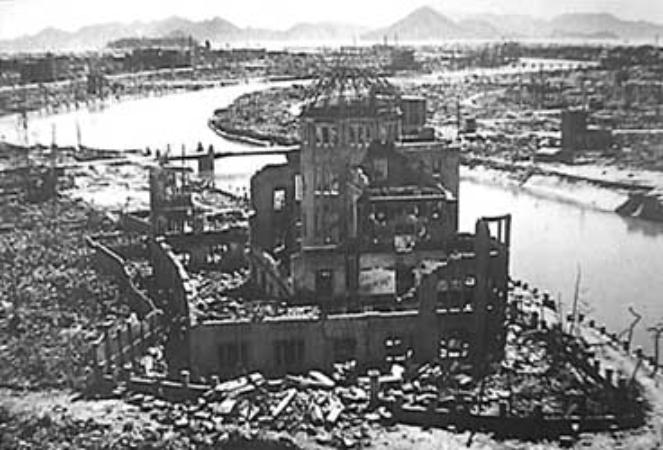
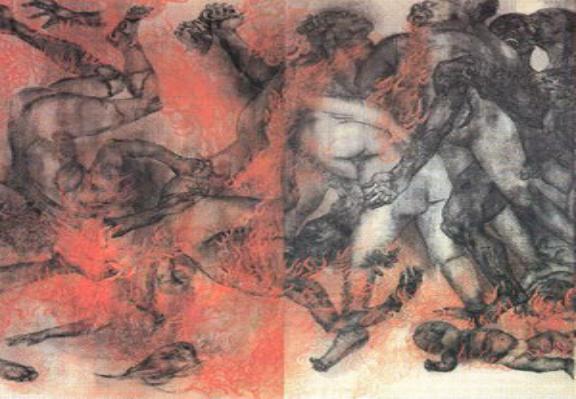
American Spreads Hiroshima’s Nuclear Legacy MSNBC August
4, 2007 (Excerpt) TOKYO - Sixty-two
years later, the memory of the atomic bombing of Hiroshima still holds such a
grip on Japan that its defense minister has had to resign simply for
suggesting the attack was "unavoidable.” Now, in a sign of changing times, the
task of spreading Hiroshima's message to the world has been entrusted to an
American, a citizen of the country that dropped the bomb on Aug. 6, 1945. Monday's
anniversary comes just a month after Fumio Kyuma was forced to quit as
defense minister for seeming to implying that the bombing was inevitable,
because otherwise Japan would have gone on fighting and would have lost
territory to a Soviet invasion. Not so, says Steven
Leeper, the first American to head the Hiroshima Peace and Culture
Foundation. "Historically, that's not correct," he said in an
interview, "And it's unbelievable that he said it."Leeper shares
the view of most Japanese: that Japan had already lost the war and that the
bombing of Hiroshima, and of Nagasaki three days later, was wrong and
unnecessary. "Everybody
knows on the left and the right that Japan was finished at the time the bomb
was dropped," Leeper said. Historically,
the American justification was that the bombing ended the war and limited the
number of U.S. military and Japanese civilian lives that would have been lost
in a land invasion. The Japanese perspective argues that Japan was already
working on negotiating a peace treaty, as well as a surrender, and that the U.S. dropped the bomb to
test its destructive power and to intimidate the Soviet Union. |

|
Beyond Disaster: The war in Iraq is
about to get worse—much worse By Chris Hedges Truthdig.com August 6, 2007 (Excerpt) The war in Iraq is about to get worse—much worse. The Democrats’ decision to let the war run its course,
while they frantically disown responsibility, means that it will
sputter and stagger forward until the mission collapses.
This will be
sudden. The security of the Green Zone, our imperial city, will be
increasingly breached. Command and control will disintegrate. And
we will back out of Iraq humiliated and defeated. But this will not be
the end of the conflict. It will, in fact, signal a phase of the war
far deadlier and more dangerous to American interests. Iraq no longer exists as a unified country.
The experiment that was Iraq, the cobbling together of disparate and
antagonistic patches of the Ottoman Empire by the victorious powers
in the wake of World War I, belongs to the history books. It will never
come back. The Kurds have set up a de facto state in the north, the
Shiites control most of the south and the center of the country is a
battleground. There are: ·
2 million Iraqis who
have fled their homes and are internally displaced. ·
Another 2 million
have left the country, most to Syria and Jordan, which now has the largest
number of refugees per capita of any country on Earth. ·
An Oxfam report
estimates that one in three Iraqis are in need of emergency aid, but the
chaos and violence is so widespread that assistance is impossible. Iraq
is in a state of anarchy. The American occupation forces are one more source of
terror tossed into the caldron of suicide bombings, mercenary armies,
militias, massive explosions, ambushes, kidnappings and mass
executions. But wait until we leave. It was not
supposed to turn out like this. Remember all those visions of a
democratic Iraq, visions peddled by the White House and fatuous pundits like Thomas Friedman and
the gravel-voiced morons who pollute our airwaves on CNN and Fox News?
They assured us that the war would be a cakewalk. We would be greeted
as liberators. Democracy would seep out over the borders of Iraq to
usher in a new Middle East. Now, struggling to salvage their own
credibility, they blame the debacle on poor planning and mismanagement.  By SAMEER N.
YACOUB, Associated
Press Writer August 6, 2007 (Excerpt) BAGHDAD - Iraq's political crisis worsened Monday
as five more ministers announced a boycott of Cabinet meetings — leaving the embattled prime minister's unity
government with no members affiliated with Sunni political factions.  America's 'Terror Wars' and the
‘quiet’, ignored lessons of
Northern Ireland The Boston Globe August 2, 2007 (Excerpt) The
conduct of this campaign and the way it ended provide lessons to the United
States today, if only we are prepared to learn them. Instead we seem intent, just like the British in Northern
Ireland, on learning only from our own mistakes.  By James
Carroll International Herald Tribune, France (via The
Boston Globe) August 6, 2007 (Excerpt) Regarding Iraq, the answer
is clear: My nation keeps the conflagration burning. Like
legions of Americans, I have long since concluded that the Iraq war is
misbegotten and must end, but I helplessly watch as it careens along, like a
runaway train from an old movie, with "responsible" figures from
the Pentagon to the White House to Congress to opinion makers continually
pouring more fuel into its boilers. Throttle on! Here
is the disconnect that matters this August: A vast population of shamed American
citizens, seeing the war as key to multiple unfolding disasters, regard it as
the most pressing issue in the world. But so what? Private brooding
desperately seeks a mode of public action, yet is thwarted. The American myth is
that such concern gives form to the political process, never more so than
during a presidential election. But there, too, as the candidate debates
steadily show, the defining note is one of ineffectual detachment.  ~INTERVIEW~ Sheldon Richman, editor of The
Freeman, discusses the history of American
imperialism and the growth of domestic government since America lost
the Spanish-American war, the roots of Anti-American terrorism (Bush I and
Bill Clinton), laissez faire economics, libertarianism and social Darwinism. Click
Here For MP3 Audio Stream Sheldon
Richman is editor of The Freeman, published
by The Foundation for Economic Education |


|
Media Blitz for War: The Big Guns of
August by Norman Solomon AntiWar.com August 3, 2007 (Excerpt) This week the U.S. media establishment is mainlining
another fix for the Iraq war: It isn't so bad after all, American military
power could turn wrong into right, chronic misleaders now serve as
truth-tellers. The hit is that the war must go on. When the White House chief of staff Andrew
Card said five years ago that "you don't introduce new products in
August," he was explaining the need to defer an all-out PR campaign for
invading Iraq until early fall. But this year, August isn't a bad month to
launch a sales pitch for a new and improved Iraq war. Bad products must be
re-marketed to counteract buyers' remorse. "War critics" who have
concentrated on decrying the lack of U.S. military progress in Iraq are now
feeling the hoist from their own petards. But that's to be expected. Those
who complain that the war machine is ineffective are asking for more
effective warfare even when they think they're demanding peace. If Michael O'Hanlon and Kenneth Pollack
didn't exist, they'd have to be invented. The duo's op-ed piece Monday in the
New York Times, under the
headline "A
War We Just Might Win," was boilerplate work from elite
foreign-policy technicians packaging themselves as "two analysts who
have harshly criticized the Bush administration's miserable handling of
Iraq." A recent eight-day officially guided tour led them to conclude
that "we are finally getting somewhere in Iraq, at least in military
terms." Both men have always
been basic supporters of the Iraq war. O'Hanlon is a prolific writer at the
Brookings Institution. Pollack's credits include working at the CIA and
authoring the 2002 bestseller The
Threatening Storm: The Case for Invading Iraq. In the years
since the candy and flowers failed to materialize, their critiques of the
Iraq war have been merely tactical.  Part 2 (Movie)
|

|
Tomdispatch.com July 24, 2007 The secret prison was set up on a secure U.S. Naval
base outside the U.S. and so beyond the slightest recourse to legal
oversight. It was there that the CIA clandestinely brought its “suspects” to be interrogated,
abused, and tortured. That description might indeed sound like Guantanamo
2002, but think again. According to New York Times reporter
Tim Weiner’s new history of the
Central Intelligence Agency, Legacy
of Ashes — a remarkable
treasure trove of grim and startling information you hadn’t known before — this actually
happened first in the Panama Canal Zone in the early 1950s. It was there, as
well as at two secret prisons located in Germany and Japan, the defeated Axis
powers (and not, in those days, in Thailand or Rumania), that the CIA brought
questionable double agents for “secret experiments” in harsh
interrogation, “using techniques on
the edge of torture, drug-induced mind control, and brainwashing.” This was but a small
part of “Project Artichoke,” a 15-year, multi-billion dollar “search by the CIA for
ways to control the human mind.”  James Elmer Mitchell And
Bruce Jessen, Washington’s
Sociopathic-Architects Of Torture and Depravity
America's
‘coercive’ interrogation methods were reverse-engineered by two C.I.A.
psychologists who had spent their careers training U.S. soldiers to endure
Communist-style
torture techniques. The spread of these tactics was fueled by a myth about a
critical "black site" operation.
by Katherine Eban
Vanity
Fair
July 17, 2007
(Excerpt) Mitchell and Jessen's
methods were so controversial that, among colleagues, the reaction to their
names alone became a litmus test of one's attitude toward coercion and human
rights. Their critics
called them the "Mormon mafia" (a reference to their shared
religion) and the "poster boys" (referring to the F.B.I.'s
"most wanted" posters, which are where some thought their
activities would land them). The reversed sere
tactics they originated have come to shatter various American
communities, putting law enforcement and intelligence gathering on a
collision course, fostering dissent within the C.I.A., and sparking a war
among psychologists over professional identity that has even led to a threat
of physical violence at a normally staid A.P.A. meeting. The spread of the
tactics—and the photographs of their wild misuse at Abu Ghraib—devastated America's
reputation in the Muslim world. All the while, Mitchell and Jessen have
remained more or less behind the curtain, their almost messianic belief in the
value of breaking down detainees permeating interrogations throughout the war
effort. "I think [Mitchell and Jessen] have caused more
harm to American national security than they'll ever understand," says
Kleinman. The bitterest irony is that the tactics seem to have
been adopted by interrogators throughout the U.S. military in part because of
a myth that whipped across continents and jumped from the intelligence to the
military communities: the false impression that reverse-engineered sere
tactics were the only thing that got Abu Zubaydah to talk. |

|
Why Do They Hate Us? Start With John
Bolton
By Jim Lobe Inter Press Service August 2nd, 2007 (Excerpt) Does
former UN Amb. John Bolton – now with the neo-conservative American Enterprise Institute (AEI)
— still speak for Dick Cheney? The
new British government of Prime Minister Gordon Brown must be scratching its
collective head over that question given the truly unbelievably arrogant and threatening
op-ed Bolton, a Cheney protege, published
in Wednesday’s
Financial Times. The column’s title, “Britain Cannot Have Two Best Friends,” refers to what Bolton calls “a clear decision point” for Britain — to choose between the United States and the European Union or, as he refers to it, the “European porridge” of which he so clearly disapproves. For Bolton, it is a zero-sum game, and, in his view, it is now up to Brown to make the choice. “[W]hether the ‘special relationship’ grows stronger or weaker lies entirely in British hands,” he states. |

|
Iraq's
National Power Grid Nearing Collapse By Ryan Lenz AP August 5, 2007 (Excerpt) Electricity shortages are a perennial problem in
Iraq, even though it sits atop one of the world's largest crude-oil reserves.
The national
power grid became decrepit under Saddam Hussein because his regime was under
U.N. sanctions after the Gulf War and had trouble buying spare parts or
equipment to upgrade the system. One of the biggest problems facing the national
grid is the move by provinces to disconnect their power plants from the
system, reducing the overall amount of electricity being generated for the
entire country. Provinces say they have no choice because they are not
getting as much electricity in return for what they produce, mainly because
the capital requires so much power.  Iran feels the chill in US cold war tactics By Kaveh L. Afrasiabi Global Research, Canada - via Asia Times August 2, 2007 (Excerpt) Washington has dispatched its
frontroom team, Defense Secretary Robert Gates and Secretary of State
Condoleezza Rice, to the Middle East, ostensibly to give the peace process a big
push. In reality, they are acting as shrewd arms merchants, while at the same
time talking of the struggle for people for freedom against oppression.
Someone please order Joseph Heller's Catch
22 as mandatory flight reading for them. |

|
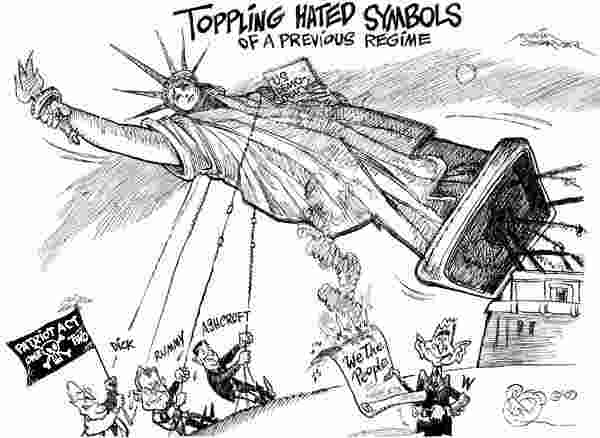
Inch by Inch… DEMOCRATS SELL OUT: Congressionals
Enable A Surveillance Law Far Exceeding White House Needs “For the first time, the new law makes surveillance
without warrants, which was being conducted in secret by the NSA and in
disregard of the Foreign Intelligence Surveillance Act, legal.” By James Risen The New York Times August 6, 2007 James
Risen reports for The New York Times that Bush has signed legislation into
law broadly expanding the government's authority to eavesdrop
on the international telephone calls and email messages of American citizens
without warrants. The impact reaches
far beyond what the Bush administration had said was needed to gather
information about foreign terrorists. For the first time, the new law makes surveillance without
warrants, which was being conducted in secret by the NSA and in disregard of
the Foreign Intelligence Surveillance Act, legal. FISA is the 1978 law that was supposed to
regulate the way the government can listen to the private communications of
American citizens.
 U.S. FISA Court "Secretly" Struck Down
Bush Spying Reuters
– India August 3, 2007 (Excerpt) WASHINGTON (Reuters) -
A U.S. intelligence court earlier this year secretly struck down a key
element of President George W. Bush's warrantless spying program, The
Washington Post reported in its Friday edition. The decision is one reason Congress is trying to give legal
authorization to the spying program in fevered negotiations with the Bush
administration this week, the Post reported. The intelligence-court judge, who remains anonymous, concluded that the
government had overstepped its authority by monitoring overseas
communications that pass through the United States, the Post said, citing
anonymous government and congressional sources. The Bush administration expanded its surveillance
efforts after the Sept. 11, 2001, hijacking attacks, without court oversight.
The court was allowed to review the program in January.  ACLU
Condemns Administration Circumvention of Spy Judge |
||||||

Return of the Robber Barons
VDARE.com August
1, 2007 As the Bush Regime outfits B-2 stealth
bombers with 30,000-pound monster "bunker
buster" bombs for its coming attack on
Iran, the US economy continues
its 21st century decline. While profits soar for the armaments industry, the
American people continue to take it on the chin. The
latest report from the Bureau of Labor Statistics shows that the real wages
and salaries of US civilian workers are below those of 5 years ago. It could
not be otherwise with US corporations offshoring good jobs in order to reduce
labor costs and, thereby, to convert wages once paid to Americans into
multi-million dollar bonuses paid to CEOs and other top management. Good
jobs that still remain in the US are increasingly filled with foreign workers
brought in on work visas. Corporate public relations departments have
successfully spread the lie that there is a shortage of qualified US workers,
necessitating the importation into the US of foreigners. The truth is that
the US corporations force their American employees to train the lower paid
foreigners who take their jobs. Otherwise, the discharged American gets no
severance pay. [See, for example, BofA: Train your replacement, or no
severance pay for you By
David Lazarus, San Francisco
Chronicle, 2006] Law firms, such as Cohen & Grigsby, compete
in marketing their services to US corporations on how to evade the law and to
replace their American employees with lower paid foreigners. As Lawrence Lebowitz,
vice president at Cohen & Grigsby, [send him mail] explained in the law firm’s marketing video,
"our goal is clearly, not to find a qualified and interested US
worker." Meanwhile,
US colleges and
universities continue to graduate hundreds of thousands of
qualified engineers, IT professionals, and other professionals who will never
have the opportunity to work in the professions for which they have been
trained. America today is like India of yesteryear, with engineers working as
bartenders, taxi cab drivers, waitresses, and employed in menial work in dog
kennels as the offshoring of US jobs dismantles the ladders of upward
mobility for US citizens. Over
the last year (from June 2006 through June 2007) the US economy created 1.6
million net private sector jobs. As Charles
McMillion of MBG Information Services
reports each month, essentially all of
the new jobs are in low-paid domestic services that do not require a college
education. The
category, "Leisure and
hospitality," accounts for 30% of the new jobs, of which: ·
387,000
are bartenders and waitresses, ·
38,000
are workers in motels and hotels, and ·
50,000
are employed in entertainment and recreation. The
category, "Education and health
services," accounts for 35% of the gain in employment, of
which: ·
100,000
are in educational services and ·
456,000
are in health care and social assistance, principally ambulatory health care
services and hospitals. "Professional and technical
services"
accounts for 268,000 of the new jobs. "Finance
and insurance" added 93,000 new jobs, of which about one
quarter are in real estate and about one half are in insurance. "Transportation and warehousing"
added 65,000 jobs, and wholesale and retail trade added 185,000. Over the entire year, the US economy created merely 51,000 jobs in
architectural and engineering services, less than the 76,000 jobs created in
management and technical consulting (essentially laid-off white collar
professionals). Except for a well-connected few graduates, who find their way into Wall
Street investment banks, top law firms, and private medical practice,
American universities today consist of detention centers to delay for four or
five years the entry of American youth into unskilled domestic services. Meanwhile
the rich are getting much richer and luxuriating in the most fantastic
conspicuous consumption since the Gilded Age. Robert Frank has dubbed the
new American world of the super-rich "Richistan." In
Richistan there is a two-year waiting list for $50 million 200-foot yachts.
In Richistan Rolex watches are considered Wal-Mart junk. Richistanians sport
$736,000 Franck Muller timepieces, sign their names with $700,000 Mont Blanc
jewel-encrusted pens. Their valets, butlers (with $100,000 salaries), and
bodyguards carry the $42,000 Louis Vitton handbags of wives and mistresses. Richistanians
join clubs open only to those with $100 million, pay $650,000 for golf club
memberships, eat $50 hamburgers and $1,000 omelettes, drink $90 a bottle
Bling mineral water and down $10,000 "martinis
on a rock" (gin or vodka poured over a diamond) at New York’s Algonquin Hotel. Who
are the Richistanians? They are CEOs who have moved their companies abroad
and converted the wages they formerly paid Americans into $100 million
compensation packages for themselves. They are investment bankers and hedge
fund managers, who created the subprime mortgage derivatives that currently
threaten to collapse the economy. One of them was paid $1.7 billion last
year. The $575 million that each of 25 other top earners were paid is paltry
by comparison, but unimaginable wealth to everyone else. Some
of the super rich, such as Warren Buffet and Bill Gates, have benefited
society along with themselves. Both Buffet and Gates are concerned about the
rapidly rising income inequality in the US. They are aware that America is
becoming a feudal society in which the super-rich compete in conspicuous
consumption, while the serfs struggle merely to survive. With
the real wages and salaries of American civilian workers lower than 5 years
ago, with their debts at all time highs, with the prices of their main
asset--their homes--under pressure from overbuilding and fraudulent finance,
and with scant opportunities to rise for the children they struggled to
educate, Americans face a dim future. Indeed,
their plight is worse than the official statistics indicate. During the
Clinton administration, the Boskin Commission rigged the inflation measures
in order to hold down indexed Social Security payments to retirees. Another deceit is the measure called "core inflation." This
measure of inflation excludes food and energy, two large components of the
average family’s budget.
Wall Street and
corporations and, therefore, the media emphasize core inflation, because it
holds down cost of living increases and interest rates. In the second quarter
of this year, the Consumer Price Index (CPI), a more complete measure of
inflation, increased at an annual rate of 5.2% compared to 2.3% for core
inflation. An
examination of how inflation is measured quickly reveals the games played to
deceive the American people. Housing prices are not in the index. Instead,
the rental rate of housing is used as a proxy for housing prices. More
games are played with the goods and services whose prices comprise the
weighted market basket used to estimate inflation. If beef prices rise, for
example, the index shifts toward lower priced chicken. Inflation is thus held
down by substituting lower priced products for those whose prices are rising
faster. As the weights of the goods in the basket change, the inflation
measure does not reflect a constant pattern of expenditures. Some economists
compare the substitution used to minimize the measured rate of inflation to
substituting sweaters for fuel oil. Other
deceptions, not all intentional, abound in official US statistics. Business Week’s June 18 cover story [The Real Cost Of Offshoring, by Michael Mandel] used the recent
important work by Susan N. Houseman to
explain that much of
the hyped gains in US productivity and GDP are "phantom gains" that are not really there. Other
phantom productivity gains are produced by corporations that shift business
costs to consumers by, for example, having callers listen to advertisements
while they wait for a customer service representative, and by pricing items
in the inflation basket according to the low prices of stores that offer
customers no service. The longer callers can be made to wait, the fewer the
customer representatives the company needs to employ. The loss of service is
not considered in the inflation measure. It shows up instead as a gain in
productivity. In
American today the greatest rewards go to investment bankers, who collect
fees for creating financing packages for debt. These packages include the
tottering subprime mortgage derivatives. Recently, a top official of the Bank
of France acknowledged
that the real values of repackaged
debt instruments are
unknown to both buyers and
sellers. The market
has never priced many of the derivatives. Think
of derivatives as a mutual fund of debt, a combination of good mortgages,
subprime mortgages, credit card debt, auto loans, and who knows
what. Not even institutional buyers know what they are buying or how to
evaluate it. Arcane pricing models are used to produce values, and pay
incentives bias the assigned values upward. Richistan
wealth may prove artificial and crash, bringing an end to the new Gilded Age.
But the plight of the rich in distress will never compare to the decimation
of America’s
middle class. The offshoring of American jobs has destroyed opportunities for
generations of Americans. Never before in our history has the elite had such
control over the government. To run for national office requires many millions of dollars, the
raising of which puts "our" elected representatives and
"our" president himself at the beck and call of the few moneyed
interests that financed the campaigns. America as the land of opportunity has passed into history. COPYRIGHT CREATORS SYNDICATE, INC. Paul
Craig Roberts [email him] was
Assistant Secretary of the Treasury in the Reagan Administration. He is the
author of Supply-Side Revolution : An Insider's
Account of Policymaking in Washington; Alienation and the Soviet Economy
and Meltdown: Inside the Soviet Economy,
and is the co-author with Lawrence M. Stratton of The Tyranny of Good Intentions : How
Prosecutors and Bureaucrats Are Trampling the Constitution in the Name of
Justice. Click here for
Peter Brimelow’s
Forbes Magazine interview with Roberts about the recent epidemic of
prosecutorial misconduct. |



|
Fox Attempted Interview
‘Smear’ of Ron Paul Backfires FOX August 5, 2007 |
Ron Paul Wins “By
wide margin” In FreedomWorks GOP Presidential
Straw Poll
Online Poll Receives a Staggering 16,371 Individually
Validated Ballots Business Wire (via
Freedomworks.org) August 3, 2007 WASHINGTON--(BUSINESS WIRE)--FreedomWorks
officially closed its Republican Presidential Straw Poll early this morning
after 16,371 limited government conservatives cast their votes over 3 days of
polling. Texas Representative Ron Paul won by a wide margin with 56 percent of the vote. Senator Fred
Thompson snatched the second place position, with Duncan Hunter taking third.
The FreedomWorks Straw Poll provides the most complete view of the limited
government movement heading into the Iowa Straw Poll on August 11th. For
complete results, visit http://www.freedomworks.org/strawpoll  Ron Paul: The
Internet's favorite candidate  Ron Paul Fox News Video Gets Over 32000 Views
(Video)  The
Ron Paul Saga-The Best is Yet to Come With fund raising efforts exceeding expectations and seemingly
unstoppable momentum, Ron Paul continues to be a candidate on the rise. While other presidential campaigns have
sputtered, peaked, and are on the decline, he has positioned himself to
become a serious contender. He still has a lot of room for growth, but in
this process he is being elevated from second tier status to one of the top
five Republican presidential candidates. The
success of his campaign has caught many by surprise, including himself. Some
of his rivals are now trying to duplicate his formula, but true spontaneous grassroots movements cannot be
generated or manufactured [video].
His support is diverse, and what is becoming increasingly clear is that
before all is said and done, Ron Paul will have made a huge impact, win or
lose.  ABC
Should Explain Ron Paul/GOP Debate Poll & Comment Board Deletions
|